Plain answers for busy households
Water Damage Questions, Answered Simply
FAQ
Answers to common questions
- What should I do first when I find water in my home?
- Stay safe first. If water is near outlets, appliances or the panel, keep away and shut off power only if you can reach the switch dry. Stop the source if you can, like a supply valve. Move small items to dry ground and take photos. Then request a callback to check provider availability, because a local provider can assess the damage and plan the drying.
- Can I dry out a wet room myself with fans and towels?
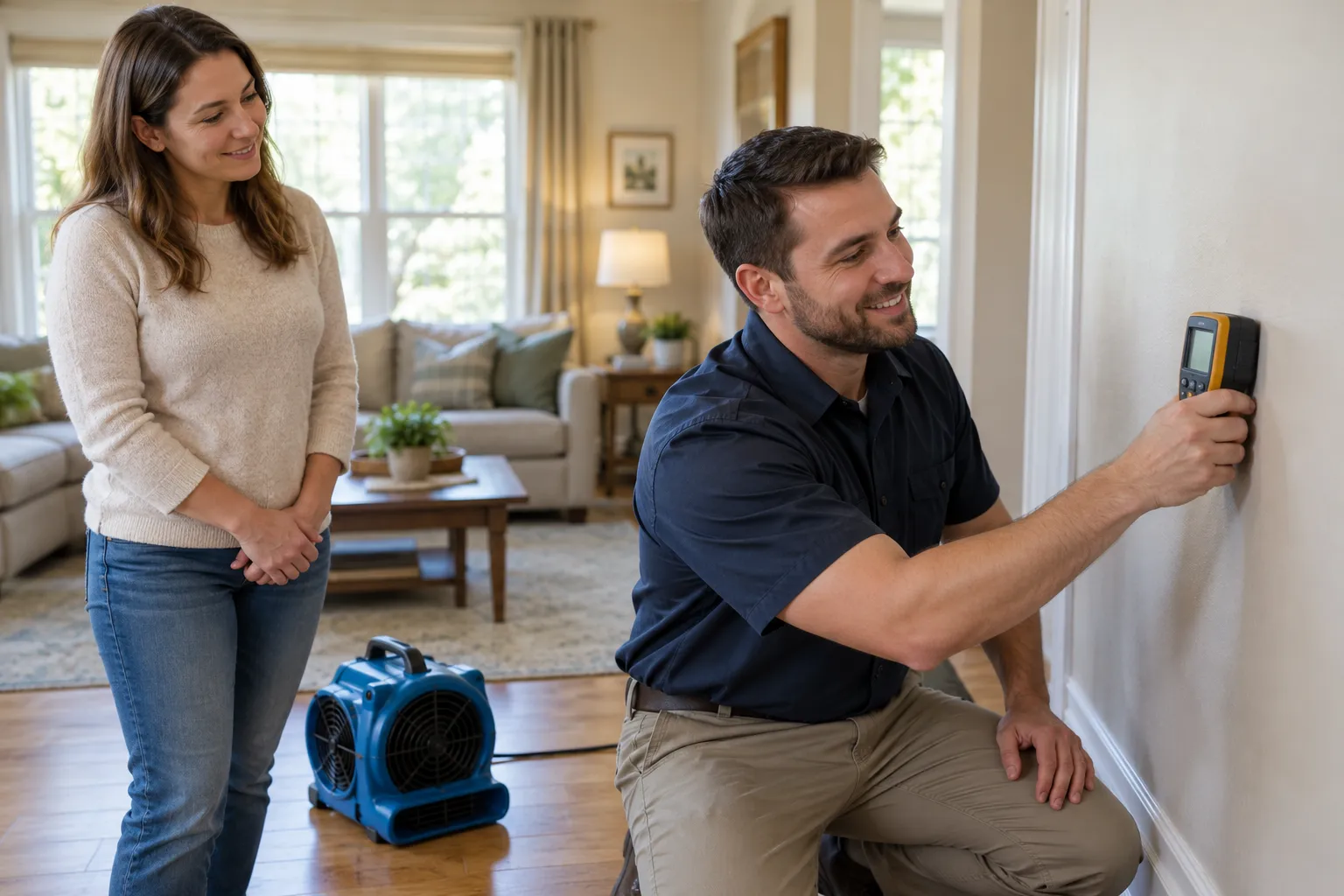
- Towels and a fan can help with a small spill on a hard floor. But water often hides in subfloors, wall cavities and under cabinets. Surface drying can leave that moisture behind, and damp framing can grow mold. A provider uses meters and strong equipment to find and dry hidden water. Ask them whether your situation needs more than a DIY approach.
- How long does structural drying usually take?
- Many jobs take a few days, but it depends on how much water got in, what materials are wet, and the weather. Dense items like framing and subfloors dry slower than carpet. Providers check moisture levels each visit and stop when readings are normal. Ask the provider for a realistic timeline and how they will work around your family's schedule.
- Is it safe to stay in the house during cleanup?
- Often yes for clean water from a broken supply line, though noise from fans can be a lot. Stay out of any area with standing water near electrical items. Dirty water from sewage or a flooded basement can carry germs, so keep kids and pets away. Ask your provider which rooms are safe and when it is fine to return.
- How can I tell if mold is starting to grow?
- Look for a musty smell, fuzzy or dark spots, peeling paint or walls that stay damp. Mold can start to appear when materials stay wet for a couple of days. If you see signs, avoid disturbing it and limit how much you handle the area. A provider can assess it and explain next steps, which may include testing.
- Will my homeowners insurance cover the damage?
- Some policies may cover sudden damage, like a burst pipe, while slow leaks or flooding from outside are often treated differently. Check your policy and talk with your insurer. Providers can often help document damage for a claim with photos and notes. Exitaccounting Restoration is a referral service and cannot say what your policy will do.
- How can I prevent water damage before winter and spring melt?
- Clear gutters and point downspouts away from the foundation. Seal cracks around basement walls and windows. Insulate exposed pipes and know where your main shutoff is. Test your sump pump before snow melts, since fast spring runoff can overwhelm it. A quick fall check can save a lot of trouble when the weather turns.
- How much does water damage cleanup typically cost?
- In the U.S., small jobs may run from a few hundred dollars to a couple thousand, while larger floods can reach several thousand or more. Cost depends on the size of the area, the type of water and the materials affected. Prices vary by job, so request an estimate and ask the provider for a written quote before work starts.
Contact Us
Request a callback
Tell us what happened and where. A provider in our network can follow up with questions and a written estimate. No obligation.
No obligation