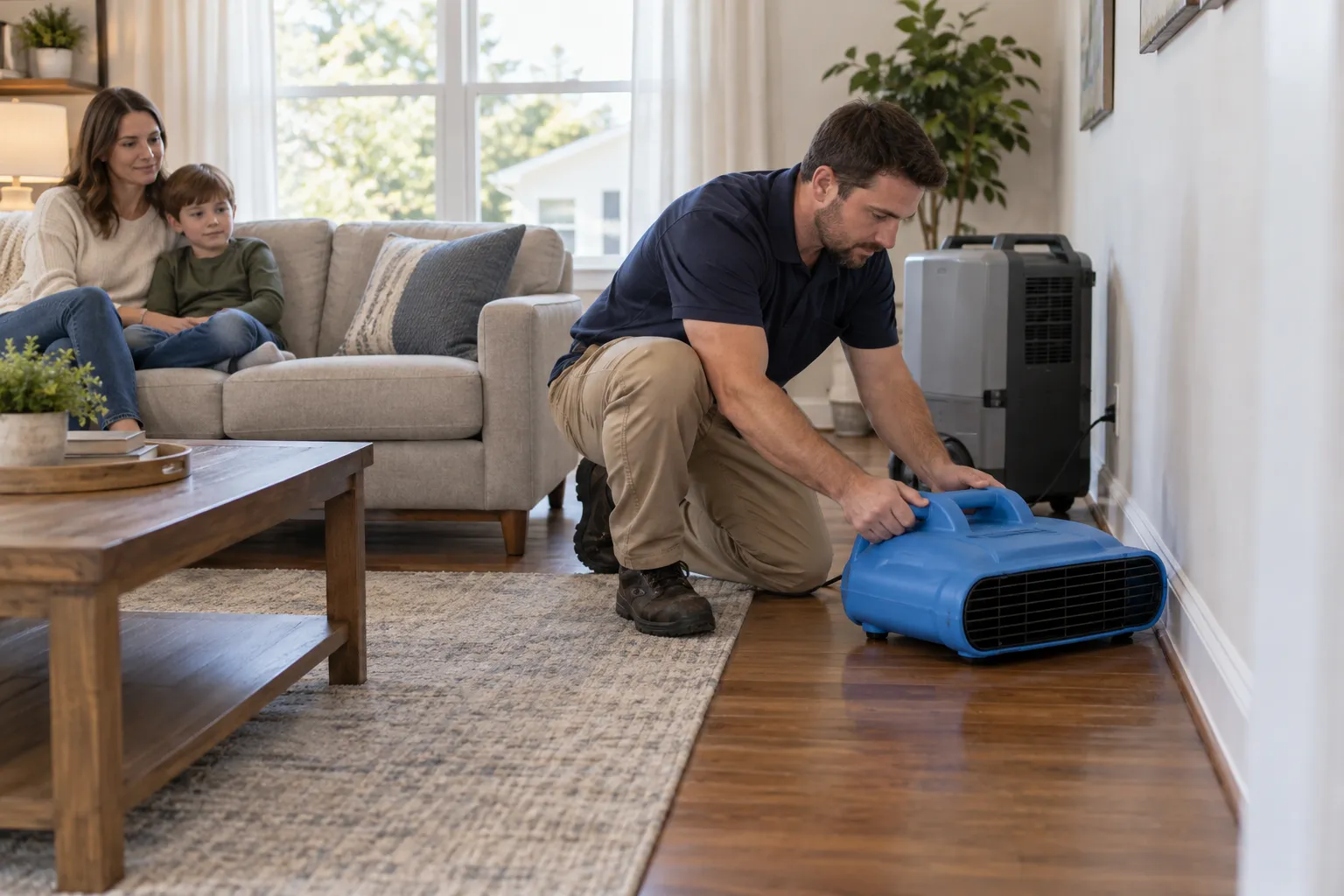
Water extraction is the first job after a leak, flood or burst pipe. A local provider uses pumps and vacuums to remove standing water from floors, carpet and low spaces. Then structural drying begins. Air movers and dehumidifiers pull moisture out of wood framing, drywall and subfloors, even where you cannot see it.
Exitaccounting Restoration is a referral service. We connect homeowners in Denver and the Denver metro area with independent providers in our network, and the provider does the work. Many can respond quickly, and good ones plan visits around school runs, jobs and sleep. Ask for a written estimate, compare options, and choose what suits your household. There is no obligation to hire anyone.
Standing Water? Start Here
If water is pooling in your home, safety comes first. Stay out of rooms where water touches outlets, cords or appliances. If it is safe to do so, shut off the water source. Then reach out to a provider who can pull the water out and start drying.
Request a callback to check provider availability in your area.
Why Getting the Water Out Early Matters
Water does not stay where it lands. It wicks into drywall, soaks into carpet pad and slips under flooring. The longer it sits, the deeper it goes. Wet materials can swell, warp and stain. Damp spaces can also start to grow mold, and that can add more work and more disruption for your family.
Many providers can respond quickly. Availability varies, so it helps to ask early.
How Water Extraction Works
Extraction is the bulk removal of liquid water. A provider may use:
- Submersible pumps for deep standing water
- Truck-mounted or portable wet vacuums for floors and carpet
- Specialty tools that lift water from tile, wood and low spots
The goal is simple. Remove as much liquid as possible so the drying stage has less to fight.
What Happens After the Pumps Stop
A floor that looks dry is not always dry. Moisture hides inside walls, under cabinets and in the layers beneath your flooring. This is why extraction is only half the job. Structural drying handles what is left.
How Structural Drying Works
Structural drying pulls moisture out of the building itself. Providers often place air movers to push dry air across wet surfaces. Dehumidifiers then collect the moisture from the air so it cannot settle back in.
They often use moisture meters and sometimes thermal cameras to find damp spots behind surfaces. Readings are taken again during the job to confirm the materials are drying as expected.
Why Seasons Change the Plan
Season by season, the weather shapes the work. Fast spring melt can push water into basements and crawl spaces. Heavy snow loads can lead to roof leaks. Hail can break through weak spots in a roof or siding. Winter air is dry, which can help drying, but cold rooms slow evaporation. A provider can adjust equipment and heat to match the weather outside.
In homes with newer frame construction, wood framing and drywall can hold moisture. Stucco and wood exteriors can also let water in at seams. A good assessment looks at all of these.
How Long Does Drying Take?
Most jobs take several days, though it depends on the size of the area, the materials and the weather. Thick framing and subfloors take longer than thin drywall. Your provider should explain the likely timeline and check readings along the way. Be wary of anyone who promises an exact finish without looking at the damage first.
Planning Around Your Week
Drying equipment runs for days, so it helps to plan around your week. Share your schedule with the provider early. Ask about visit windows that fit school drop-offs, work hours and naps. Ask where the equipment will go, and how loud it will be at night. Many households find it easier to keep one quiet room fully clear of equipment.
What You Can Do While You Wait
A few simple steps can help while you arrange help:
- Move small furniture, rugs and electronics to a dry room
- Lift curtains and loose items off wet floors
- Open interior doors and closets for airflow if it is safe
- Take photos and short videos of the damage
- Keep damaged items until the provider has looked at them
Do not use a household vacuum on water. Do not turn on ceiling fixtures under a wet ceiling.
Documenting for Your Claim
Some policies may cover sudden damage, so check your policy and talk with your insurer. Providers can often help document damage for a claim. Photos, moisture readings and written notes are all useful. Keep every receipt.
Questions to Ask the Provider
Before you agree to work, ask:
- Will you give me a written estimate before starting?
- What equipment will you use, and for how many days?
- How will you check that the structure is truly dry?
- Are you insured and licensed for work in my area?
- How do you handle visits around my family's schedule?
- What happens if more damage turns up behind the walls?
Signs the Job Is Done
A finished drying job ends with readings that match dry, unaffected areas of your home. There should be no musty smell and no soft or cool spots on walls and floors. Ask the provider to share the final readings in writing.
Ready to Compare Options?
Reach out, share a few details about the water, and you can compare independent providers on your own terms. There is no obligation.
When to Call Again
If you notice a musty odor, new stains or peeling paint days after drying, tell the provider. Early follow-up is easier than a bigger repair later. Request a callback to talk through next steps.
What's Included
Standing Water Removal
Pumps and wet vacuums clear pooled water from floors, carpet and low spaces before it spreads further.
Moisture Mapping
Meters and cameras help locate hidden damp spots behind walls and floors.
Air Movers and Dehumidifiers
Equipment is placed to move dry air across wet materials and pull moisture out.
Progress Checks and Records
Providers re-test moisture levels during the job and can share readings and photos for your records.
What Extraction and Drying May Cost
Costs vary by job size, water type, materials and local rates. These are typical U.S. ranges only. Always ask for a written quote before work begins.
| Item | Typical range | Notes |
|---|---|---|
| Small water extraction | $300 – $1,000 | One room, shallow water |
| Large-area extraction | $1,000 – $4,000 | Multiple rooms or deep water |
| Structural drying equipment | $800 – $3,500 | Often priced per day and per unit |
| Moisture inspection | $150 – $500 | May be included in a larger job |
| Carpet pad removal | $300 – $1,200 | Depends on area and disposal |
| Full dry-out project | $1,500 – $8,000 | Varies widely by damage and materials |
How It Works
Make It Safe
Stay clear of wet electrical areas and stop the water source if it is safe.
Reach Out
Request a callback or request an estimate to be matched with a provider.
Extract and Dry
The provider removes standing water, sets drying equipment and checks moisture levels.
Confirm It Is Dry
Review final readings with the provider before walls and floors are closed up.
Why Call Exitaccounting Restoration
Plans That Fit Your Week
Ask providers about visit windows that work around school, jobs and sleep.
Local Providers
Independent providers know how regional weather and housing shape drying work.
Clear Estimates
Compare written estimates so you know the scope before anything starts.
No Obligation
Ask questions and compare options with no pressure to hire anyone.
Other Services
Need water extraction & structural drying in Denver?
Tell us what happened and where. A provider in our network can follow up with questions and a written estimate. No obligation.
No obligationWater Extraction & Structural Drying FAQ
- How long does structural drying take after a flood?
- Most jobs take several days, but it depends on the area, the materials and the weather. A provider should check moisture readings along the way and explain the expected timeline.
- Can I just use fans and a shop vac myself?
- For a very small spill, maybe. For larger leaks, moisture often hides inside walls and floors. Professional equipment and moisture meters help find and dry those hidden areas before mold can start.
- Does homeowners insurance cover water extraction?
- Some policies may cover sudden damage, such as a burst pipe, but not all. Check your policy and speak with your insurer. Providers can often help document the damage for a claim.
Request a callback
Tell us what happened and where. A provider in our network can follow up with questions and a written estimate. No obligation.
No obligation